
If I go barefoot in grass, will I be more creative?
That’s the premise of my undergraduate thesis↗ project. After delving into curiosity, and becoming fascinated with the concept of how going for a walk in nature always seems to get our creative juices flowing, I wanted to explore if a simple intervention could improve creativity. ↓
(Much gratitude to my mentor, Professor Ted Paterson, and committee members Professors Jay Hardy and Chad Murphy, Oregon State University College of Business, for their patient guidance and wisdom throughout this research.)
For millennia, we’ve leaned on nature.
Time outdoors provides us with a plethora of social, emotional, physical, and intellectual benefits, from healing to attention restoration and increased imagination. We’ve adapted to our environment over the course of history. In fact, that draw to nature we feel when we’re underneath tree canopies or listening to the crashing of ocean waves has a name: biophilia.*
Modern life, for most of us, looks different. We’re spending record amounts of time indoors as a species!
This creates a tension with our modern way of life — but why is spending less time in nature concerning?
See, for example: Gullone, E. (2000). The Biophilia Hypothesis and Life in the 21st Century: Increasing Mental Health or Increasing Pathology? Journal Of Happiness Studies, 1(3), 293–322.

The proliferation of urban workspaces has led to a diminished opportunity to experience nature. (We can change this!)
For most people, daily interaction with nature only occurs in neighborhoods. But what happens when urban areas are now marked by a high proportion of artificial materials devoid of local flora and fauna?
We’re moving away from the environments that humans adapted to live in — what researchers call the “Environment of Evolutionary Adaptation”. These environments historically consisted of a closer presence of nature than our experiences today.
This is noteworthy because our brains are particularly vulnerable to the absence of natural elements.
Biophilic design seeks to challenge the mismatch between our built environments and human needs, by introducing direct (plants, open windows) and indirect opportunities (landscape paintings) for people to encounter nature in places like the workplace. This can even mean replicating the nature space and experience, as in a wandering pathway among cubicles.**
See: Samways, M. J. (2007). Rescuing the extinction of experience. Biodiversity and Conservation, 16(7), 1995–1997. | Grinde, B., & Patil, G. G. (2009). Biophilia: Does Visual Contact with Nature Impact on Health and Well-Being? International Journal of Environmental Research and Public Health, 6(9), 2332–2343. | Aydogan, A., & Cerone, R. (2020). Review of the effects of plants on indoor environments. Indoor and Built Environment, 1420326X19900213. | Kellert, S., & Calabrese, E. (2015). The practice of biophilic design. London: Terrapin Bright LLC.
Nature boosts the way we work.
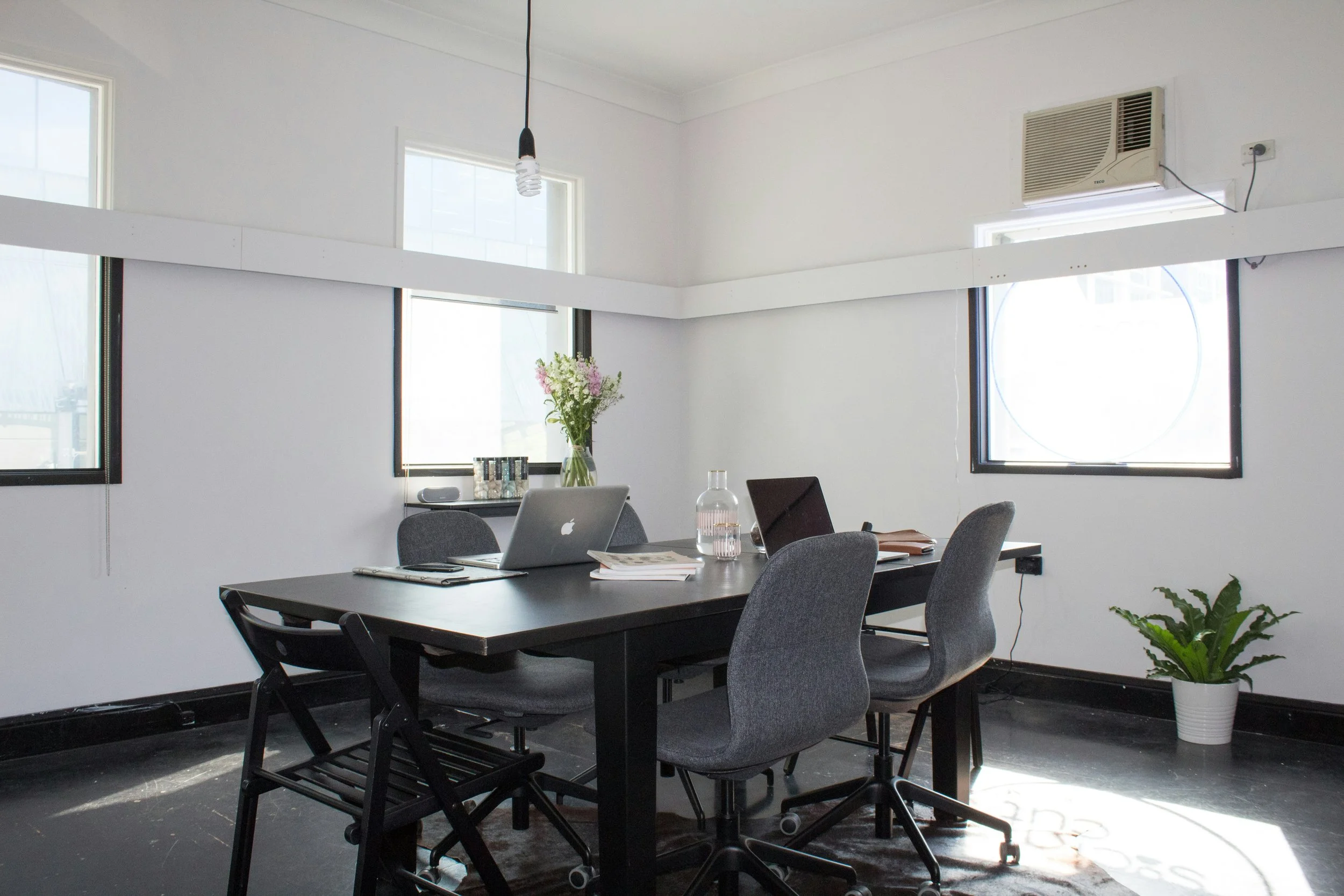
In addition to creating “microrestorative” experiences in stressful environments such as the workplace, researchers have shown a direct link between plants and improved job-related outcomes such as worker productivity, attentional capacity and job satisfaction.
See, for example: Evensen, K., Raanaas, R., Hägerhäll, C., Johansson, M., & Patil, G. (2017). Nature in the Office: An Environmental Assessment Study. Journal of Architectural and Planning Research, 34(2), 133–146. | Bringslimark, T., Hartig, T., & Patil, G. G. (2009). The psychological benefits of indoor plants: A critical review of the experimental literature. Journal of Environmental Psychology, 29(4), 422–433.
And what about creativity?
The Attention Restoration Theory outlines two types of attention and helps us understand how nature makes us more creative.
The direct attention system is called upon in unnatural environments like driving a car or office work. This gets tiring quickly because we’re subject to some 11,000,000 bits of information per second, but the brain can only adapt to 15-20 bits. The excess information tires us mentally as we sift through it.

① Direct attention system
Spontaneous attention is the ability to experience things unnoticed. This “soft fascination” stimulates our brain without being mentally tiring. Nature encourages this type of attention and stimulation.
② Spontaneous attention
Nature restores the cognitive resources that get depleted by the direct attention system. Taking a break from engaging in the incubation and preparation stages of the creative process and going out into nature improves our conscious work. In fact, engaging in some parts of the creative process, like mind wandering, while in nature can lead to increased flexibility and the formation of new connections between ideas!
It’s no doubt that creativity, the ability to imaginatively make rather than imitate, is critical to problem-solving and tackling today’s challenges. In fact, creativity was regarded as one of the top three skills to thrive in 2020!
Growing research affirms that nature has a significant influence on multiple parts of the creative process. Specifically, the creative process consists of four steps: preparation, incubation, the idea stage, and evaluation. The preparation stage is when we direct our attention to a topic, start gathering information and look into issues that we find intriguing and evoke our curiosity. In the incubation stage, we engage in conscious work stops and attention drifts to other subjects, but unconsciously, the creative process continues. This unconscious scanning is based on personal, visual and sensory attributes. The idea stage is when we have concrete and conscious ideas. Finally, the evaluation stage is the check to determine if our insight is valid and rationally worth pursuing.
Nature has a significant influence on the preparation and incubation stages.
See: Yu, C.-P. (Simon), & Hsieh, H. (2020). Beyond restorative benefits: Evaluating the effect of forest therapy on creativity. Urban Forestry & Urban Greening, 51, 126670. | Wallas, G. (1926). The art of thought. | Dul, J., & Ceylan, C. (2011). Work environments for employee creativity. Ergonomics, 54(1), 12–20. | Plambech, T., & Konijnendijk van den Bosch, C. C. (2015). The impact of nature on creativity - A study among Danish creative professionals. Urban Forestry & Urban Greening, 14(2), 255–263. | Klotz, A., & Bolino, M. C. (2020). Bringing the Great Outdoors into the Workplace: The Energizing Effect of Biophilic Work Design. Academy of Management Review, amr.2017.0177.

There’s growing interest in our contact with nature and creativity in the workplace, but does the type of contact influence the degree of impact?
The experiences we have in the workplace with nature range from shallow to deep. The more an interaction engages more of our senses, the deeper and important of an impact it has.
Thinking about our senses, there is a gap in the literature surrounding the effects of nature through touch. Previous research looked at the visual element, observing how glancing at the color green before engaging in a creative task enhanced creative performance. In a separate study, when participants leaned into creativity in the presence of live plants or daylight, creative levels were 15% higher.
Returning to touch, what happens if, say, we took off our shoes and stepped in grass?
To explore this question, I’m building on what we know about grounding. When we go barefoot, the continually replenished free electrons on the Earth’s surface enter our electrically conducive body, a process known as grounding. This induces multiple significant physiological changes, as the Earth’s negative potential can create a stable internal bioelectric environment for the normal functioning of all the body’s organs. In one instance, participants who completed a survey while standing barefoot in nature reported a higher connection to nature.
Will ditching the modern rubber soles that inhibit grounding increase our creativity?
See: Franco, L. S., Shanahan, D. F., & Fuller, R. A. (2017). A Review of the Benefits of Nature Experiences: More Than Meets the Eye. International Journal of Environmental Research and Public Health, 14(8). | Lichtenfeld, S., Elliot, A. J., Maier, M. A., & Pekrun, R. (2012). Fertile Green: Green Facilitates Creative Performance. Personality and Social Psychology Bulletin, 38(6), 784–797. | Harvey, M. L., Oskins, J. D., McCarter, K. N., & Baker, J. R. (2016). Direct Earth Contact: Barefootedness and Nature Connection. Ecopsychology, 8(2), 96–106.
The creative task: brainstorm a marketing campaign so that a local music store can reach younger customers.
Assessing creative performance involved the use of a creativity benchmark rating scale across three dimensions: quality, originality and elegance.
Validated by Byrne, C. L., Shipman, A. S., & Mumford, M. D. (2010). The Effects of Forecasting on Creative Problem-Solving: An Experimental Study. Creativity Research Journal, 22(2), 119–138.
Quality assessed the marketing plan’s overall character, considering completeness, coherence and usefulness.
Originality examined the level of independent thought, and whether the plan exhibited a level of unexpectedness and displayed elaboration and descriptiveness.
Elegance considered articulation and whether the plan was arranged succinctly.
The study consisted of 70 students between the ages of 18 and 29, separated into three conditions:
Shoes on and feet in a plastic tub
Shoes off and feet in a plastic tub
Shoes off and feet placed in a plastic tub with turf
In each condition, students took on the role of a recently promoted employee at a company tasked with a creative performance task.
So, were participants more creative when they put their feet in turf?
Unfortunately, I can’t say. The results were not statistically significant.
What happened?
There are a few limitations that might have confounded the results here:
The small sample size may have made it difficult to discern an effect. Future exploration should expand the number of study participants.
The study environment was in a college lab setting, which may not be the most conducive to creative performance. Would a more naturalistic environment or an observational study design have yielded different results?
Some research suggests that vegetation’s effect on our psychology may differ due to demographic variations like age. It would be worthwhile to expand future research to include different age groups.
The use of human raters, despite training, introduces the possibility of human error, and bias in the assessment of a creative performance.
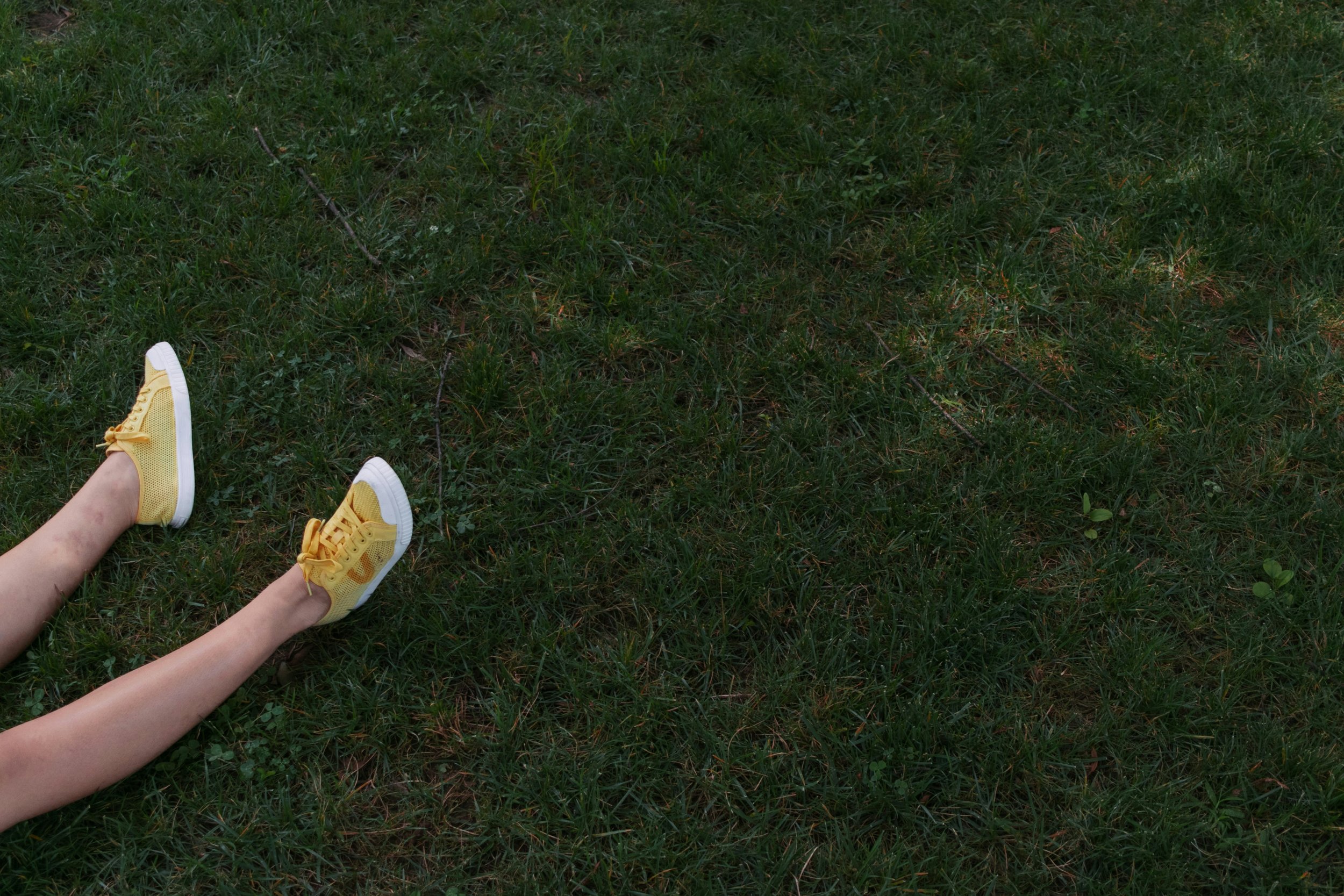
Future direction: There has been exploration into developing a nature-dose framework to promote well-being. Is there an amount of active interaction with nature that could increase creative performance?
Shanahan, D. F., Fuller, R. A., Bush, R., Lin, B. B., & Gaston, K. J. (2015). The Health Benefits of Urban Nature: How Much Do We Need? BioScience, 65(5), 476–485.
Final thoughts
Though I didn’t find the answer I had hypothesized in the study I designed, I still think it is worth considering the implications of the link between nature and creativity.
When nearly all of us are “creative geniuses” in childhood, it’s concerning that most of us lose that ability by adulthood. Today’s challenges require us to actively counter the refrain that “I’m just not that creative.” It’s imperative for us to explore interventions that bolster creativity — including rectifying our frayed relationship with nature, given nature’s positive influence on our performance and well-being.
See: Land, George & Jarman Beth, “Breakpoint and Beyond: Mastering the Future Today”, Harpercollins Publishers, 1992
Photographs: Sean Benesh/Unsplash, socialcut/Unsplash, Randy Tarampi/Unsplash, Bart/Unsplash, Dale Nibbe/Unsplash, Klemen Vrankar/Unsplash, Matt Ragland/Unsplash, Ryoji Iwata/Unsplash, Nate Rayfield/Unsplash, Jamie Waynick/Unsplash. All other photographs unknown contributors via Unsplash.