
On curiosity*
In times of instability, curiosity provides the raw materials to adapt creatively to changing conditions¹. Here, I explore how an understanding of curiosity is vital.


Being in a state of curiosity drives creativity, which allows us to adapt to change. While most of us recognize the importance of curiosity, our environments don’t always support it: For example, many employees encounter barriers to curiosity at work, despite encouragement from employers².






Curiosity rarely comes about in isolation. Rather, it emerges as a result of our interactions with the world around us.
〰️
Here are some ways to evoke curiosity⁴.
-
![Unopened present]()
Novelty
When something is new – or out of place – and we want to know or feel what it is. Note: As novelty wears off, the curiosity that arose is quickly fulfilled and gone.
-
![Iceberg mostly under the surface]()
Partial exposure
We experience this when we encounter incomplete information – or a gap in our knowledge – like when information is hidden and later revealed.
-
![Magnifying glass]()
Complexity
We experience this when we’re faced with ambiguity.
In an attempt to interpret and explore the unknown, our curiosity is piqued. -
![Crystal ball]()
Uncertainty
We experience this when we’re faced with surprise, doubt and the need to make predictions.
-
![Tragedy and comedy greek theatre masks]()
Conflict
We experience this when there’s a violation of expectation or an incompatibility between ideas and conflicting experiences.



In practice
Now that we have a better understanding of how we all approach curiosity — and how to encourage it — here’s an example of how curiosity can cultivate creativity.
Idea linking is a thinking technique that uses earlier ideas as an input for later ideas — each idea is a stepping stone to the next. This state of curiosity fuels creativity⁵.
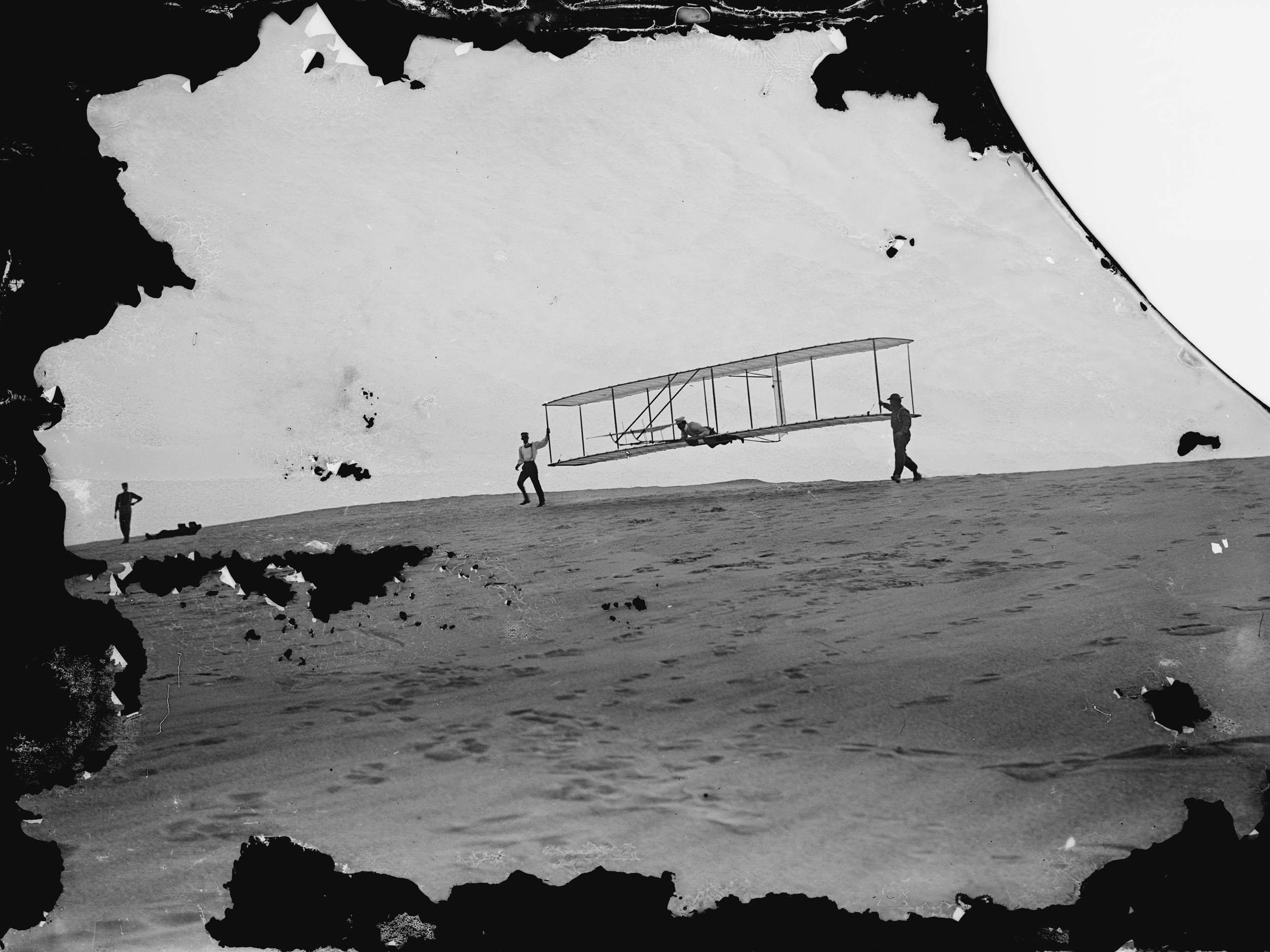
Here, we can see how the Wright Brothers’s curiosity as bike shop owners set flight.

¹ Organizational Behavior and Human Decision Processes
³ Journal of Research in Personality
⁴ Proceedings of the 25th British Computer Science Conference on Human-Computer Interaction
⁵ see 1
Emojis designed by OpenMoji. License: CC BY-SA 4.0.
Photographs: Max Ogden/Unsplash, Trent Szmolnik/Unsplash, Thought Catalog via Unsplash, Jack Bassingthwaighte/Unsplash, Toa Heftiba/Unsplash, Te Akatea/Unsplash, Kalen Emsley/Unsplash. Wright Brothers photograph via Library of Congress.